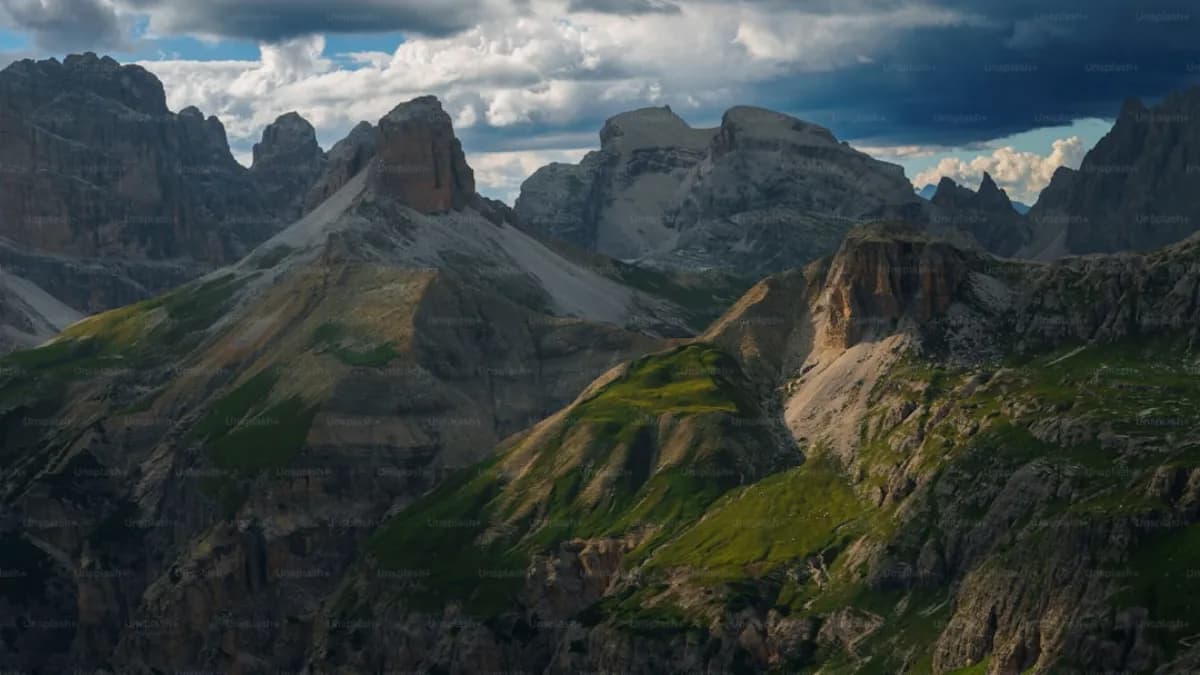
On 26 June 2009, UNESCO's World Heritage Committee inscribed the Dolomites on its list of natural sites of outstanding universal value. It was not a casual decision: these mountains represent one of the most extraordinary landscapes on the planet, where geology, biodiversity and beauty converge in an unrepeatable balance.
But what does it really mean to be a UNESCO World Heritage Site? And how can you experience adventure in these mountains while respecting the delicate ecosystem that makes them so remarkable? This guide explores the history, the science and the commitment behind the Dolomites we love.
Why the Dolomites Are a UNESCO World Heritage Site
The Dolomites encompass 9 mountain systems spread across 5 Italian provinces, covering 141,903 hectares of protected area. They are recognised for their exceptional scenic beauty and their geological importance on a global scale.
UNESCO recognised the Dolomites based on two fundamental criteria:
-
Outstanding natural beauty (criterion VII): the towers, spires and sheer rock faces create one of the most spectacular mountain landscapes in the world. The colours change with daylight — from dazzling white at midday to the fiery pink of sunset, the celebrated phenomenon known as enrosadira.
-
Geological significance (criterion VIII): the Dolomites are an open book on the history of Earth. The rock layers tell a story spanning 250 million years of evolution, from the tropical coral reefs of the Triassic to the alpine peaks of today.
Geological History: From Tropical Sea to Mountain
Imagining that where 3,000-metre peaks stand today there was once a warm, shallow sea seems almost impossible, yet that is exactly what happened. The Dolomites owe their name to French geologist Deodat de Dolomieu, who in 1791 first described the composition of dolomite rock — a double carbonate of calcium and magnesium.
The Stages of Formation
- 250–200 million years ago: coral reefs and tropical atolls form in the Tethys Sea
- 200–65 million years ago: sediments accumulate on the seabed, compacting into rock
- 65–2 million years ago: the African and European tectonic plates collide, raising the Alps
- 2 million years ago – present: glaciers carve valleys and the iconic shapes we know today
When you fly on our zipline in San Vigilio di Marebbe, you are literally soaring over an ancient seabed transformed into a mountain.
What Makes the Dolomites Unique
The Dolomites are not just beautiful — they are scientifically unique. The dolomite rock has properties found nowhere else with the same intensity:
- Colour: the double carbonate of calcium and magnesium reflects light in a unique way, creating the enrosadira
- Forms: the vertical towers and spires result from differential erosion that has no equal
- Fossils: they preserve some of the most complete fossil records from the Middle and Upper Triassic
- Biodiversity: from conifer forests to alpine meadows, they host over 1,500 plant species
The area around San Vigilio di Marebbe, where Adrenaline Adventures is based, lies in the heart of the Fanes-Senes-Braies Nature Park — one of the most important protected areas within the Dolomites UNESCO site.
Adventure Tourism and Respect for Nature
Choosing certified, environmentally responsible operators is the best way to experience adventure without leaving a trace. Adrenaline Adventures follows rigorous sustainability protocols across all its activities.
Adventure tourism in the Dolomites is not at odds with conservation — in fact, it can be a powerful ally. When people experience the mountains first-hand, they develop an emotional bond that drives them to protect them.
How Adrenaline Adventures Respects the Environment
Our commitment to sustainability is not a slogan — it is a daily practice:
- Zero ground impact: the zipline uses structures that do not alter the soil or surrounding vegetation
- Renewable energy: our operations are powered by renewable sources
- Waste management: zero-waste policy across all operational areas
- Environmental education: during every experience, our guides share information about the Dolomite ecosystem
- Conservation support: a portion of revenue is allocated to territorial conservation projects
Sustainable Practices for Visitors
You too can make a difference when visiting the Dolomites:
- Stay on marked trails to avoid damaging alpine vegetation
- Do not pick flowers, plants or minerals
- Take all rubbish with you — even biodegradable waste
- Use public transport when possible: the Val Pusteria bus network is excellent
- Choose local products to support mountain community economies
The Dolomites Through the Seasons
Each season reveals a different face of the UNESCO Dolomites:
- Spring (April–June): meadows fill with wildflowers, snow retreats from mid-altitudes, and the zipline reopens for the season
- Summer (July–August): the ideal period for outdoor adventures, with long days and mild temperatures at altitude
- Autumn (September–October): forests turn gold and crimson, the light is perfect for photography, and the crowds thin out
- Winter (November–March): the Dolomites become a skiing paradise, with the Plan de Corones resort just minutes away
Protecting the Dolomites for Future Generations
The UNESCO designation is not merely a title — it is a responsibility. It means these mountains belong to all of humanity and that we have a duty to preserve them.
Every time a visitor chooses a responsible operator, every time a tourist respects the trails and takes their rubbish home, every time someone opts for public transport instead of driving, they contribute to protecting this heritage.
At Adrenaline Adventures, we believe that adventure and conservation go hand in hand. Flying on our zipline is not just about experiencing an incredible thrill — it is about supporting a model of tourism that respects and enhances the territory.
Contact Us to Plan Your VisitRead Also
- Best Adventure Activities in the Dolomites 2026 — Your complete guide to all outdoor activities available.
- Complete Guide to San Vigilio di Marebbe — Everything you need to know to plan your visit.
- Zipline Dolomites: What to Know — Practical guide to the zipline experience in the UNESCO Dolomites.
